
Laminate is a photograph of wood glued to a wood-fiber board. The photograph does not care about water. The board underneath cares a great deal, and it does not recover.
Where this one comes from
Somewhere between “it’s not real wood, so it’s fine” and a product page with a water droplet on it. Laminate earned a reputation for being tough, and the top of the plank is tough. The core is the part nobody mentions at the register, and the core is where the story changes.
What laminate actually is
A laminate plank is a high-density fiberboard core with a printed decor layer and a clear wear layer pressed on top. The wear layer handles traffic. The core handles structure, and it is made of wood fiber and resin, which means it takes on water and swells.
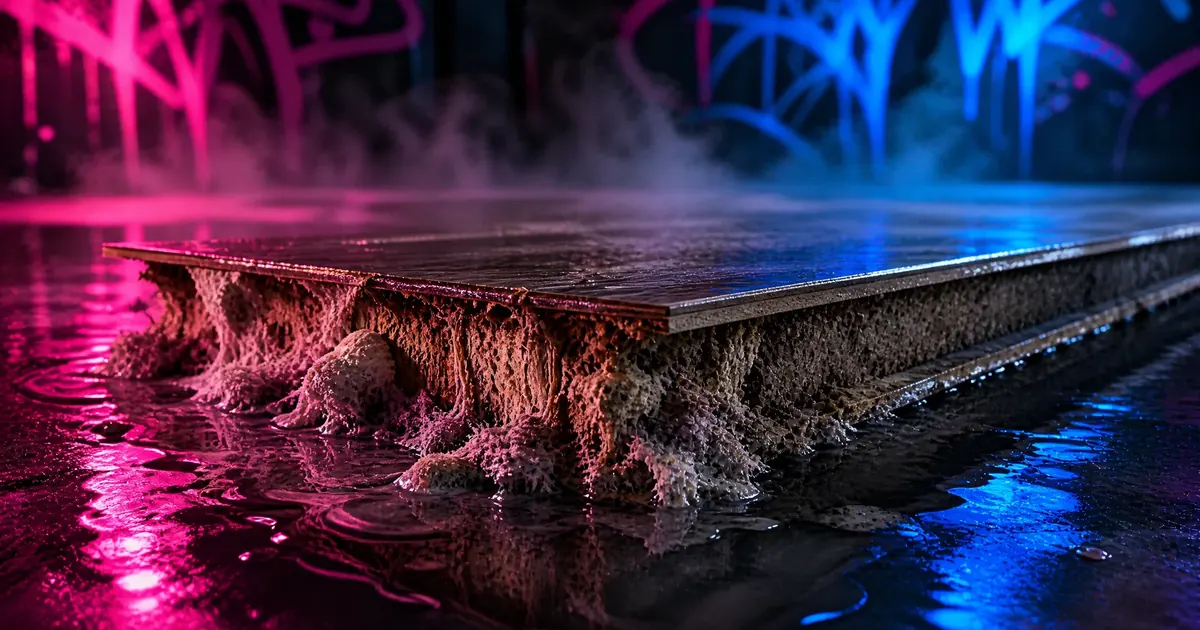
Swelling does not reverse. A raised seam stays raised. A soft edge stays soft. And you cannot sand it back, because what you would be sanding is a photograph of a floor.
Not every laminate is the same board. A cheap one has a thin wear layer and a core that dents under a chair leg. A better one has a denser core and a higher AC rating. None of that changes the water rule, because water is not attacking the wear layer. It is attacking the core at an edge, where the seal is thinnest.
What waterproof laminate can actually take
Waterproof-rated laminate exists and it is better than the old stuff. It seals the core, usually on all four edges, and treats the joint so a normal spill sits on the surface long enough for you to wipe it up. That is the job. It buys you time, not immunity.
What it does not take: standing water, a pet bowl that slops every day, a dishwasher that drips behind the cabinet for a month, a fridge with a slow line leak, a planter that drains onto the floor, or a mop wet enough to leave water standing in the seams. Those are not spills. They are a water supply with a schedule.
Treat any laminate as water-resistant in practice, even when the box says otherwise. It is not a wet-room floor, and no laminate plank replaces waterproofing the room.
What to do instead
- Wipe spills when they happen, not at the end of the day.
- Mop damp, not wet. A well-wrung mop that leaves the surface nearly dry is fine. A mop that leaves water in the seams is not.
- Protect the wet spots. A tray under the pet bowls, a mat in front of the sink, saucers under the planters, and a look behind the dishwasher and fridge now and then.
- Fix leaks immediately, even small ones. A slow drip does more damage than a spill, because nobody wipes a drip.
- If water has already reached the floor, pull the wet planks up instead of waiting for them to dry. They will not flatten back out, and trapping moisture under a plank gives mold a place to start.
- Choose the room. Bathrooms, laundry rooms, and basements are hard on laminate. If the floor will see water regularly, rigid-core vinyl handles it better, which is the honest comparison in laminate vs vinyl.
- Replace, do not sand. A swelled plank is done. Cut it out, replace it, and find the water source that caused it.
One more thing worth knowing: the same catch applies here as with waterproof vinyl. The plank resists water. The seams, the perimeter, and the subfloor did not get the memo, which is the whole point of the waterproof myth. If you are weighing materials, the material matchup is the shortest honest comparison on the site.
The short version
- Laminate has a wood-fiber core, and that core swells when water reaches it.
- Swelling is permanent: raised seams, soft edges, no repair.
- Waterproof-rated laminate resists spills. It does not survive standing water or a slow leak.
- Wipe promptly, mop damp, and put trays under anything that holds water.
- A swelled plank gets replaced, not sanded.
- In a bathroom, laundry, or basement, laminate is the wrong floor for the water.
Quick answers
Is laminate flooring waterproof?
Standard laminate is not. Its core is high-density fiberboard, which swells when water reaches it, and that swelling is permanent. Waterproof-rated laminate seals the core and the joint well enough for spills, not for standing water.
What happens if laminate gets wet?
If water reaches the core, the board swells. You see raised seams, soft edges, and a floor that never lies flat again, and the damaged plank has to be replaced rather than sanded.
Can I mop laminate floors?
Yes, with a damp mop rather than a wet one. A well-wrung mop that leaves the surface nearly dry is fine. Standing water working into the seams is how laminate gets ruined.
Is waterproof laminate okay in a bathroom?
A half bath or a bathroom without a floor drain is usually fine if you wipe up standing water. Treat it as water-resistant in practice, and do not use laminate in a wet room or a room with a floor drain.