

“Waterproof” is a claim about a plank, not a room. The box is being honest about one object in your bathroom and silent about the other eight. Water still finds the seams, the perimeter gap, the toilet flange, and a subfloor that never got a vote.
Where this one comes from
A salesperson taps a floating display, says the magic word, and moves on. Waterproof. In your head the whole bathroom is now sealed like a cooler. That leap is reasonable, because the packaging is doing its best impression of a pool liner and nobody at the register is drawing a diagram.
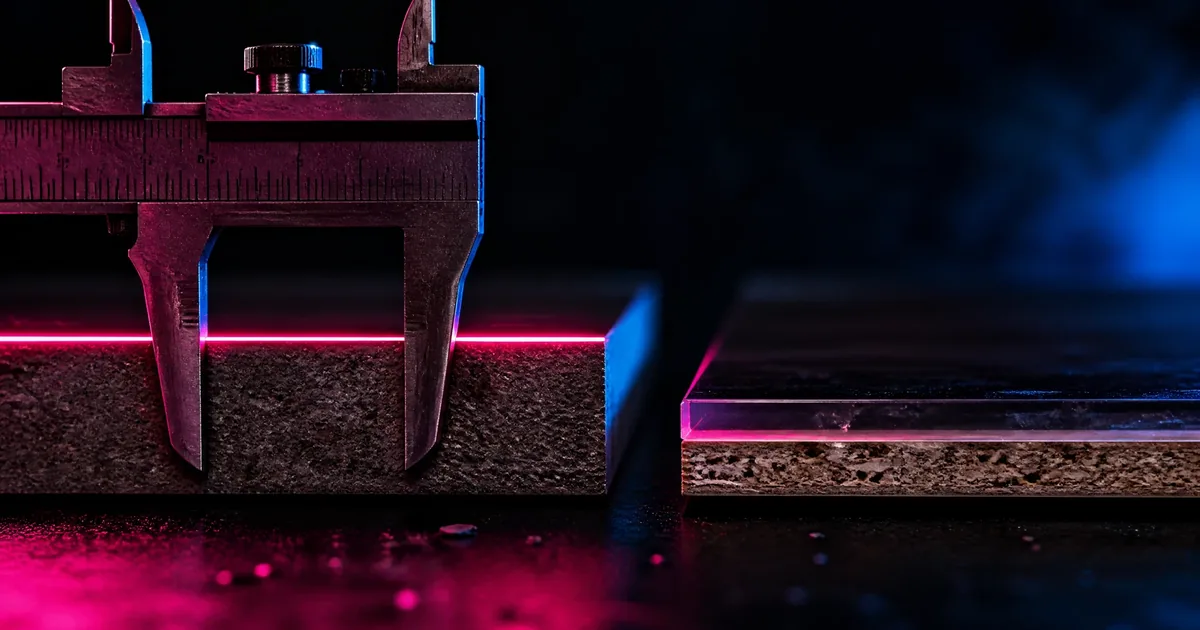
Here is what the label really covers: the core of the plank and, on most rigid-core vinyl, the click joint. That is a genuine feature. A spill in the middle of a plank will not destroy the board. It says nothing about the assembly. A floor is a system, and the sticker did not come with the rest of the system.
Where the water still gets in
Start at the seams. A click joint is a mechanical lock, not a gasket. Water that pools in a seam works its way down without needing a gap you can see. Tile is not automatically better: grout is porous, and a tiled floor is not a waterproof assembly unless there is a membrane under it.
Then the perimeter. Every floating floor needs an expansion gap at the wall, and that gap is open. A mop puddle, an overflowing tub, a supply line dripping behind the toilet: the water runs to the edge of the room, drops into the gap, and is now under your floor where you cannot see it.
Then the penetrations. The toilet flange, the vanity lines, the radiator pipes. Every hole in the floor is a hole in the floor.
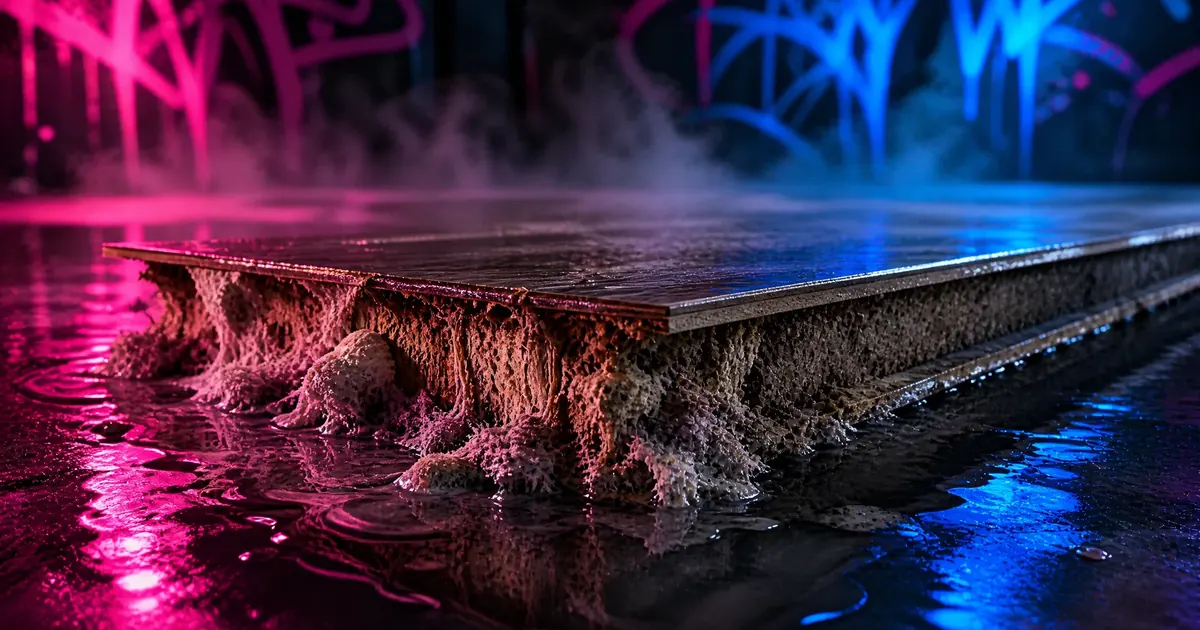
And under all of it, the subfloor. Wood subfloor swells and stays swollen. Concrete wicks water and passes vapor upward all day, every day, no matter what the plank is made of. That is why a vapor barrier or a rated underlayment matters over a slab, and why the word waterproof on a box says nothing about it.
What the claim does not cover
It does not cover flooding. It does not cover standing water left overnight. It does not cover a wet room with a drain, where the floor is expected to take direct water and slope toward an outlet. That is a different build with a different waterproofing layer underneath, and a floating plank is not that layer.
It also does not make every product equal. Wood and most laminate are water-resistant at best, and some of them say so in the small print. Tile and grout without a membrane are not a waterproof assembly either, which surprises people who assume tile means safe. Read the spec sheet, then read the warranty exclusions, especially the ones about subfloor damage and installation. Most warranties cover the plank. The expensive part is usually everything under it.
What to do instead
Match the floor to the water the room will actually see.
- A regular bathroom with a tub or a properly waterproofed shower: rigid-core vinyl is a defensible choice. Wipe up standing water and do not leave a soaking bath mat down for a week.
- A wet room, a curbless shower, or a laundry room with a washer that has dripped before: tile over a bonded waterproof membrane, installed by someone who will show you the membrane. Not a floating plank.
- Over concrete: a vapor barrier or an underlayment rated for it. Ask for it on the estimate.
- Anywhere: a bead of flexible sealant where the trim meets the floor will not waterproof the room, but it slows water down and buys you time to notice.
If you want the long version of what the claim covers, read what waterproof flooring actually means. If a word on the box is doing damage, the plain-English glossary has it. If you are still choosing, the material matchup puts the options side by side, including the ones that are not waterproof, and the myth index has the rest of the sales floor.
The short version
- Waterproof describes the plank core and usually the click joint. It never describes the room.
- Water still reaches the subfloor through seams, the perimeter gap, and every penetration.
- Concrete passes vapor upward, so a slab needs a vapor barrier or a rated underlayment.
- Flooding, standing water, and drain-floored wet rooms are outside the claim.
- Tile and grout need a membrane. Wood and most laminate are water-resistant at best.
- Check the warranty exclusions for subfloor and installation damage before you pay.
Quick answers
Can waterproof vinyl go in a bathroom?
Yes, for a normal bathroom floor with a tub or a properly waterproofed shower. It is not a wet-room floor. If the room has a floor drain and gets hosed down, you need a waterproofed assembly under tile, not a floating plank.
Where does water get past a waterproof floor?
Seams, the expansion gap at the perimeter, and every penetration such as a toilet flange or a supply line. From there it reaches the subfloor, which is the part that actually gets damaged.
Does waterproof flooring need a vapor barrier over concrete?
Usually yes, either a vapor barrier or an underlayment rated for the purpose. A waterproof plank core says nothing about vapor moving up through a slab.
Does the warranty cover water damage under the floor?
Read the exclusions before you buy. Most warranties cover the plank itself and exclude subfloor damage and installation, which is usually where the expensive repair is.