Myth 01
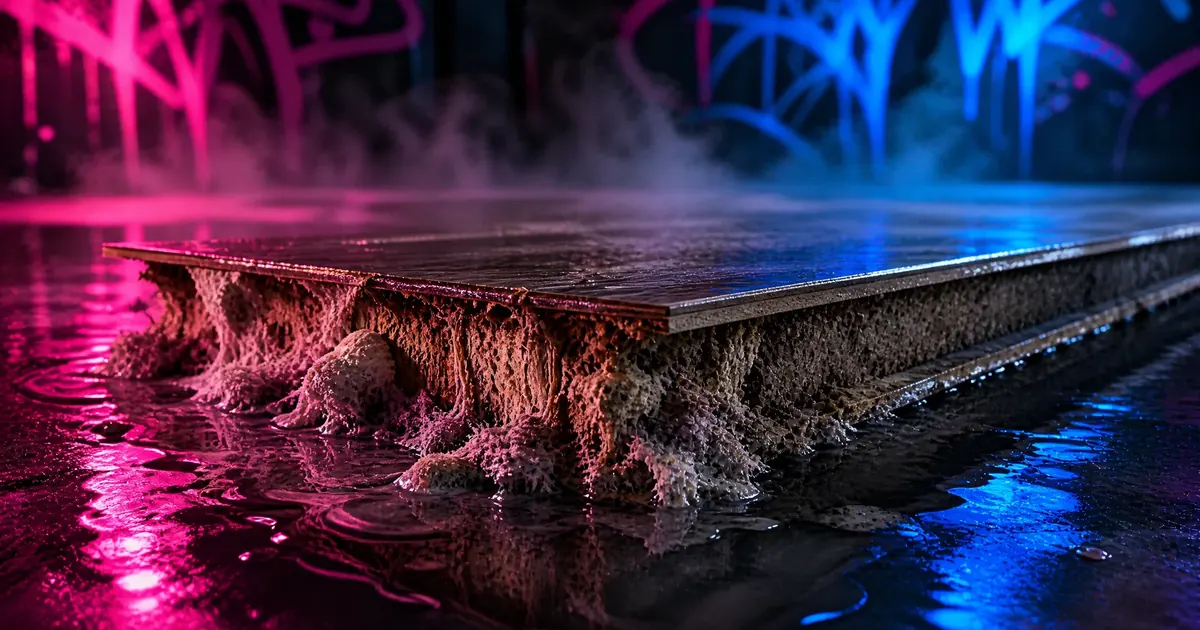
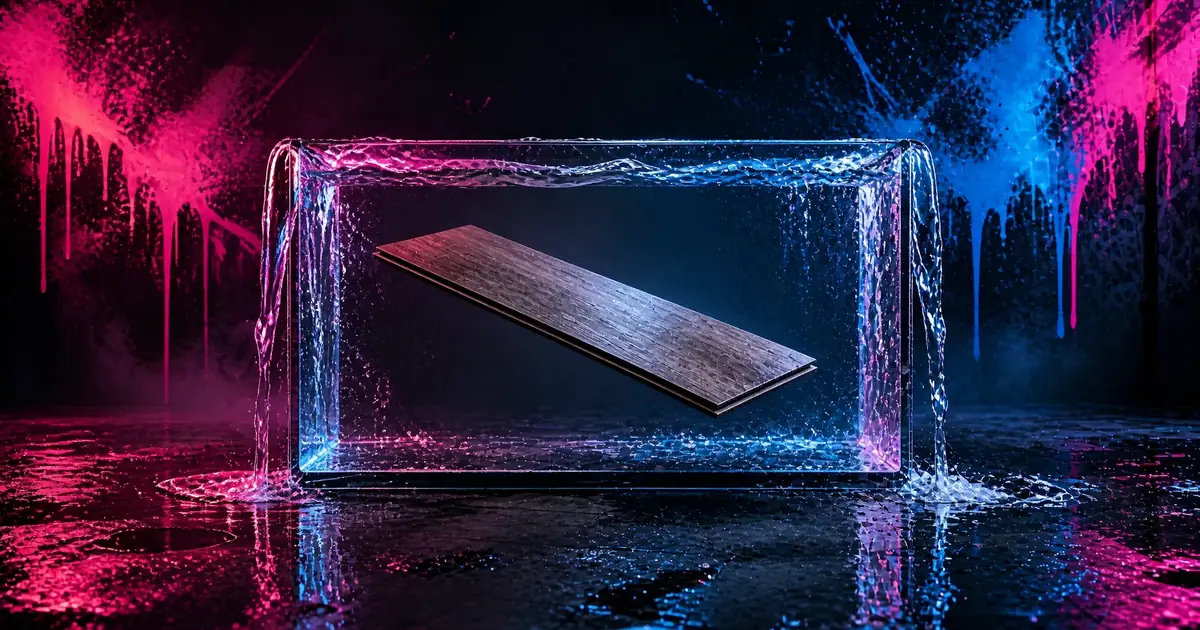
Waterproof flooring means the room is waterproof
“It says waterproof on the box, so the whole bathroom is safe.”
Truth
The plank resists water. The seams, the perimeter, and the subfloor did not get the memo.
Every one of these started as something a real person said in a real showroom. The claim gets the joke. The correction gets the detail, because the detail is the part that saves your subfloor.

A wrong flooring claim is rarely a lie. It is usually a true sentence that lost its qualifiers on the way to the sales floor. "Waterproof" is true about a plank core and false about a bathroom. "Hardwood adds value" is true in some neighborhoods, at some price points, in some condition, and false as a promise. By the time it reaches you, the qualifiers are gone and the confidence is intact.
The other reason is that flooring is sold by the box, but it performs as a system. The plank, the joint, the underlayment, the subfloor, the moisture, and the installation all act together. A claim about one part gets repeated as a claim about the whole assembly. That is how a waterproof plank ends up installed over a wet slab with a warranty that excludes water damage.
So each page below does the same three things. It states the myth in the voice you actually hear it in. It gives the straight answer in the first two sentences. Then it explains the mechanism, because "because moisture" is not an explanation and "because the HDF core swells at the exposed edge and the swelling is permanent" is.
If you only have time for one, start with the waterproof myth. It is the most expensive one, the most common one, and the one most likely to be technically true and practically misleading at the same time. If you are comparing products right now, the material matchup puts two floors side by side without the pitch, and the glossary translates the six words on the quote that decide everything.
Hover, tap, or press Enter on a card to turn it over. The link goes to the full page.
“It says waterproof on the box, so the whole bathroom is safe.”
The plank resists water. The seams, the perimeter, and the subfloor did not get the memo.
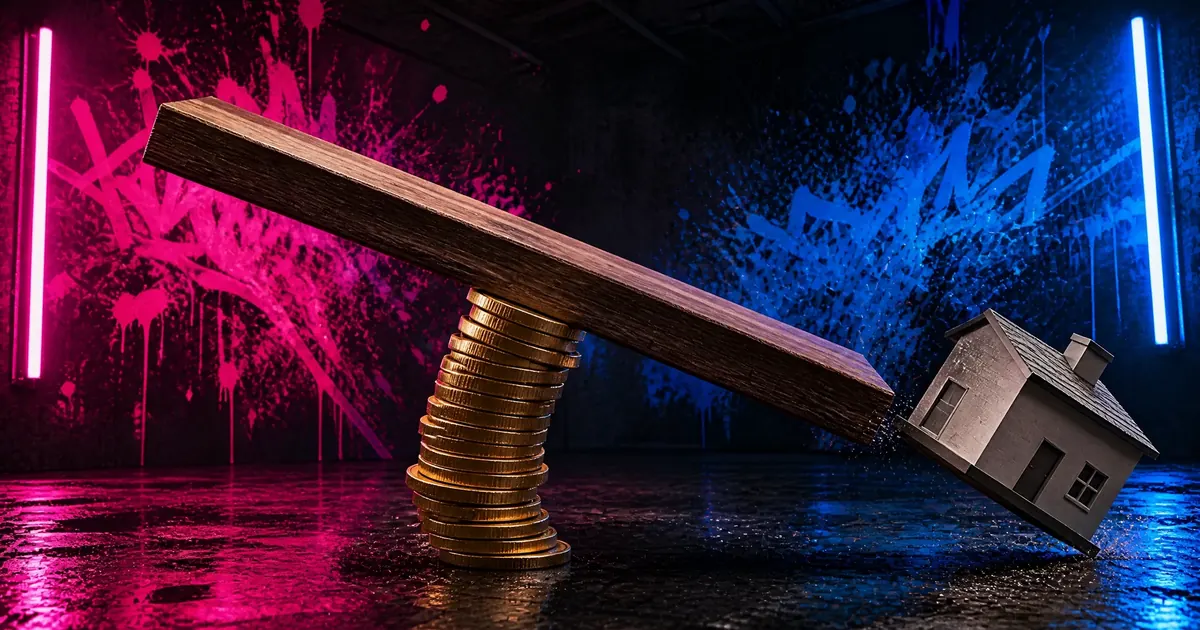
“Hardwood is an investment. You always get it back when you sell.”
Hardwood helps a house sell. It does not guarantee a number, and appraisers do not work that way.
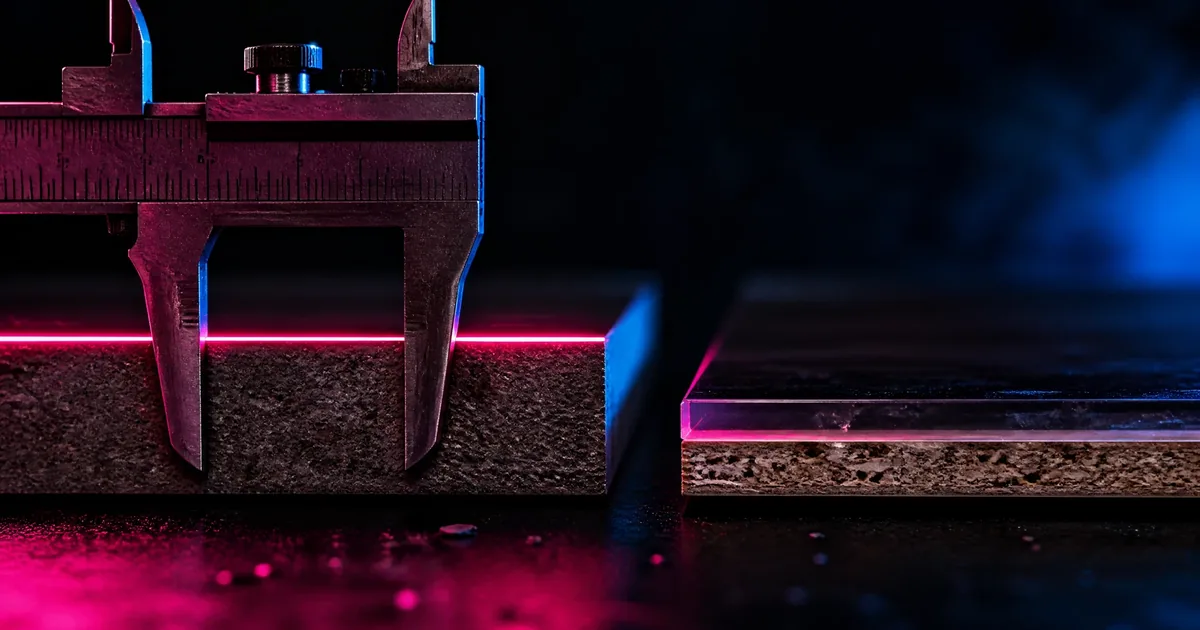
“The 12 mm floor has to be better than the 8 mm floor.”
Thickness buys stability and a quieter feel. It does not buy scratch resistance.
Laminate is a wood-fiber board wearing a waterproof costume. Water still finds the edges.
Old vinyl had real problems. Modern vinyl is not automatically one of them, and the spec sheet tells you more than the vibe.
Sometimes you can float right over it. Sometimes that is the most expensive shortcut in the house.
Carpet lost the living room. It still owns the stairs, the bedrooms, and the basement.
A plank can be waterproof. A room cannot be waterproof because of the plank. We keep those two sentences separate, because the warranty does.
The manual is the least exciting document in flooring and the only one that decides whether a warranty pays. Acclimation days, flatness tolerance, underlayment approval: it is all in there.
Every floor has a weak point: the seam, the edge, the substrate, the finish. Find the weak point and you find the honest version of the marketing claim.
Want the vocabulary first? Twelve terms, explained. Comparing two products? Four matchups, side by side. Reading instead of shopping? The article archive.